Starting a spray tan business is one of the lowest-overhead, highest-margin ways to break into the beauty industry. You don't need a storefront, a chair full of expensive equipment, or years of school. What you do need is real training, the right gear, a legal foundation, and a pricing model that actually makes money. This guide walks through every step — and the numbers behind each one.
Step 1 — Get certified before you take a single client
Certification is what turns "a girl with a spray gun" into a professional clients trust and pay premium prices. It also teaches the skin science, solution theory, and technique that prevent the orange, streaky results that kill a new business by word of mouth.
The fastest, most affordable path is online: NSTPA's Sunless Master Course is $75, self-paced, and ends in a publicly verifiable certification. If you prefer hands-on training with a live model, Sjolie Certification runs in-person classes in Rocklin, California. Either way, get the credential first — see our full guide to spray tan certification.
Tip: Buy a Sjolie professional starter kit and your NSTPA online certification is included free — the training and your first set of pro supplies in one move.
Step 2 — Do a market scan, not a logo
Before you spend a dollar on branding, spend two days understanding your local market. The most common mistake new technicians make is building a brand around a service their area doesn't need or that's already saturated. Look at Instagram geotags in your city, competitor reviews, and the bridal and event accounts nearby. Are clients posting tan results? What language do they use — "glow," "wedding tan," "vacation tan"? That tells you who's buying and how to talk to them.
Step 3 — Name and legally structure the business
Before your first paying client, decide how your business legally exists — it affects your taxes and your personal risk.
- Sole proprietorship — zero setup cost and maximum simplicity, but you and the business are legally the same, so a lawsuit can reach your personal assets (house, car, savings).
- LLC — a modest filing fee and annual paperwork, but it creates a liability shield between the business and your personal finances. For most solo spray tan techs, this is the sweet spot.
- S-Corp — worth considering only once profit is high enough that the payroll-tax savings outweigh the added accounting cost.
When you're naming the business, check that the name is available as a domain and an Instagram handle before you commit — consistency across both is worth more than a clever name nobody can find.
Step 4 — Insurance and compliance (non-negotiable)
Spray tanning is low-risk, not no-risk: allergic reactions, slip-and-falls, and overspray on a client's belongings all happen. You want both professional liability and general liability, usually bundled in a single beauty-industry policy.
For a solo technician, combined coverage with $1M/$2M limits typically runs $120–$300 per year — about the cost of one premium tan a month. Popular providers include BBI (Beauty & Bodywork Insurance, often $96–$179/year), Insurtec, and ASCP. All issue same-day proof of coverage online. For perspective, a single uninsured allergic-reaction claim can cost $5,000–$15,000 in legal fees and settlement — the policy pays for itself if it prevents one claim in your career.
Step 5 — Buy the right starter gear
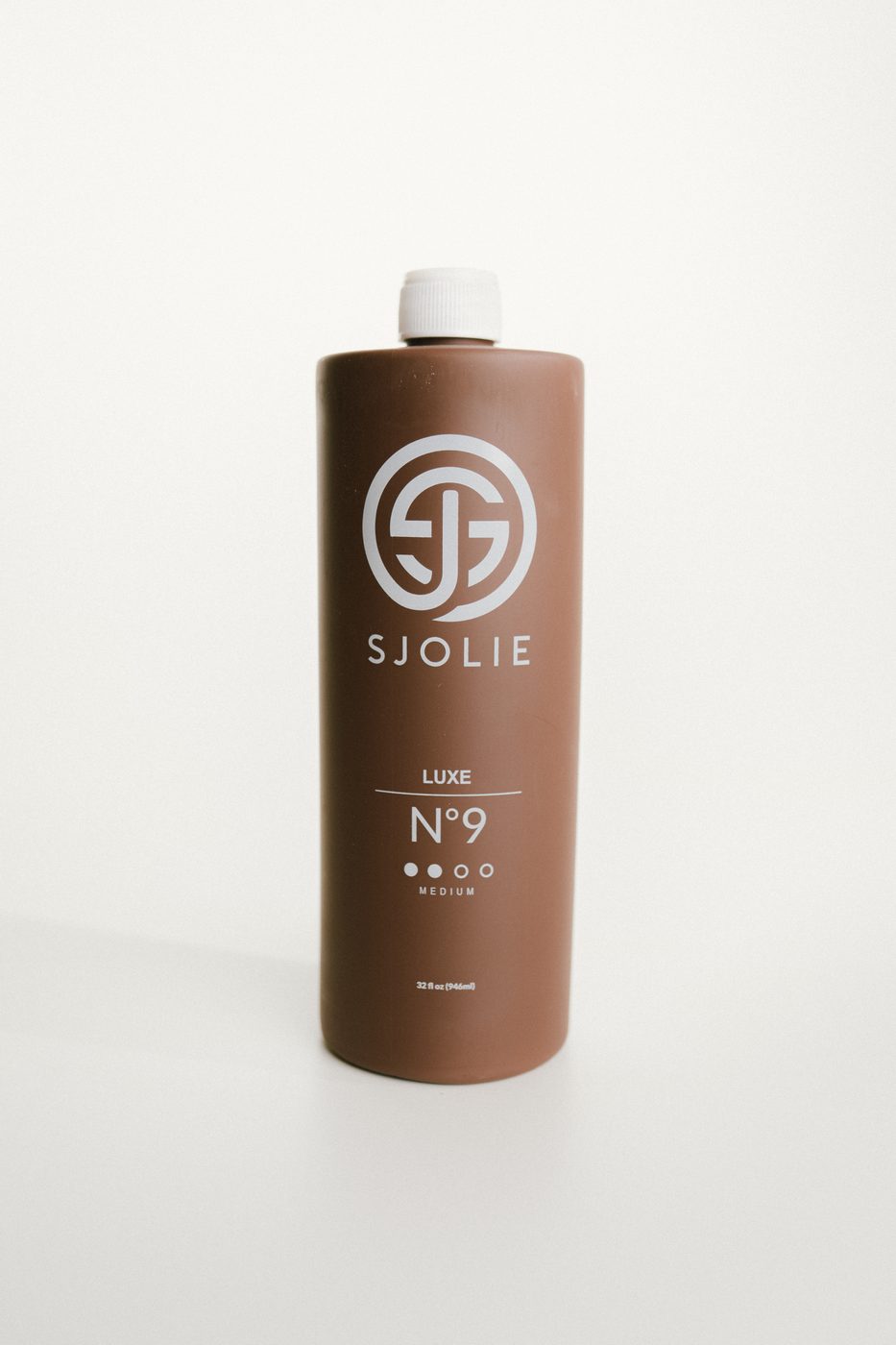
A lean professional kit is: a quality HVLP spray machine, a pop-up tent with extraction, pro solution in a couple of depths, and disposables. Sjolie's professional solution runs about $39 per quart and yields roughly 16 full-body tans — about $2.44 of solution per tan. Add disposables (sticky feet, nose filters, hair nets) at $0.50–$0.75 and barrier cream at about $0.50, and your variable cost lands around $3.50–$4.00 per tan. Need help choosing? See our best spray tan kit guide.
Step 6 — Price for profit
Pricing is the single highest-leverage decision in the business. Every market has three rough tiers:
| Tier | Price / tan | Who it fits |
|---|---|---|
| Value | $25–$40 | High-volume, booth-based. Hard to profit as a solo. |
| Mid-market | $45–$75 | Where most solo pros live — personalized service, real living. |
| Premium | $80–$150+ | Boutique studio, premium solution, bridal & mobile packages. |
With a ~$3.75 product cost and a $50–$65 mid-market price, your margin per tan is excellent — the real constraint is your time (60–75 minutes per appointment including prep and cleanup). Build a tiered menu (standard, express, bridal package, membership) so clients self-select into the service that fits their budget. Avoid the $30 race to the bottom — at that price you can't fund the systems and quality that make the business last.
Step 7 — Set up client systems before you launch
Technicians who build six-figure businesses do it on systems, not hustle. Pick booking software that handles 24/7 self-booking, collects a $10–$25 non-refundable deposit (which cuts no-shows 60–80%), and sends an automated 48-hour reminder with prep instructions. A simple intake form and a follow-up text routine turn first-time clients into monthly regulars.
Step 8 — Market where the service is visual
Spray tanning is inherently visual, so Instagram and TikTok are your single most important channel. Post before/after photos 2–3 times a week (the highest-converting content in the industry) and short application videos once a week to position yourself as a skilled professional. Partner with hairstylists, estheticians, wedding planners, and gyms for referrals that compound.
Mobile vs. studio: which model to start with
A mobile spray tan business has the lowest startup cost — no rent, you bring the tent to the client — and it's ideal for testing a market. A studio or rented salon suite adds overhead (e.g., $400/month ÷ 50 services = $8/service) but supports a premium experience and higher prices. Many pros start mobile, build a book, then add a studio.
Your first 30 days
- Enroll in the Sunless Master Course and earn your certification.
- Choose a name, register your LLC, and bind a liability policy.
- Order your machine, tent, Sjolie solution, and disposables.
- Set up booking software with deposits and reminders.
- Practice on 5–10 friends, shoot before/afters, and launch your Instagram.
- Open your calendar and start taking deposits.
Certification is the credential. Everything above is what turns it into income.